
Sustainability Through Systems Thinking & Stewardship
In a nutshell, Nazwa is a sustainability consultant, climate educator, and researcher dedicated to advancing resilient and equitable sustainability transitions. Drawing on expertise in climate governance, ESG, clean energy, and sustainable infrastructure, she combines systems thinking and evidence-informed approaches to support organizations, institutions, and communities in navigating complex sustainability challenges across diverse global contexts.

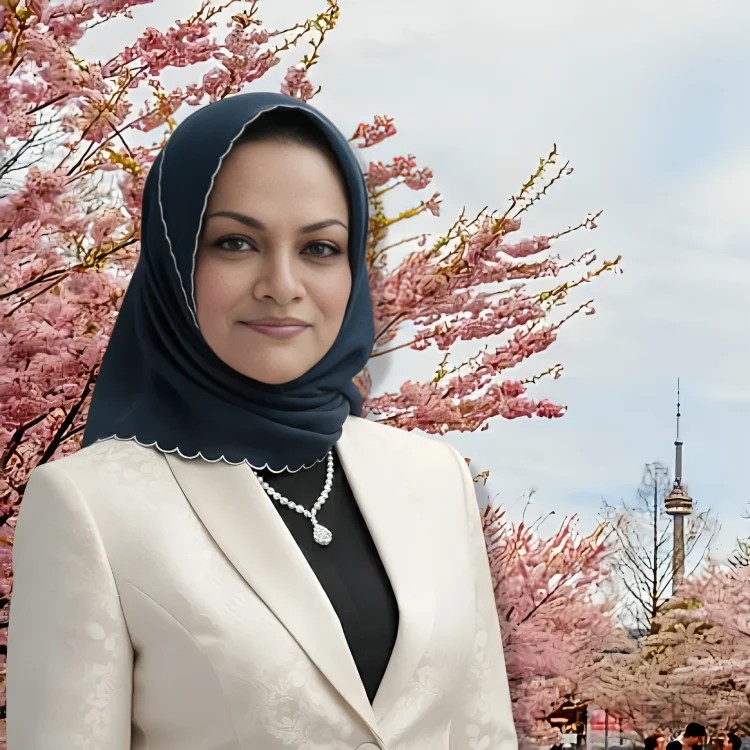
Sustainability Strategist & ESG Advisor
She is a doctoral researcher in Environmental Applied Science and Management at Toronto Metropolitan University, holds a Master of Engineering Design (MEng Design) in Sustainable Community Infrastructure from McMaster University and an MBA in Human Resource Management from IUB, Bangladesh. She also completed the Nuclear Career Accelerator Program at Ontario Tech University, a Government of Canada-supported initiative designed to develop talent for Canada’s growing nuclear sector, further strengthening her knowledge of low-carbon energy systems, infrastructure resilience, and clean energy transitions.
Nazwa is a LEED® Green Associate™, Project Business Professional (PBP®), and author of Sustainable Living: A Conceptual Model.
Guided by integrity, inclusivity, and responsible stewardship, we use systems thinking approach to foster practical, equitable, and resilient pathways toward long-term sustainability.
- Ethics and transparency, without compromise
- Inclusive sustainability; communities first
- Long-term resilience through systems-level thinking
Supporting organizations and communities through practical sustainability strategy, ESG guidance, climate literacy, and resilience-focused capacity building.
- Deliver sustainability and ESG advisory
- Strengthen climate literacy and leadership
- Promote implementation-focused solutions
A future where communities worldwide are empowered to lead resilient, equitable, and climate-ready, clean transitions through collaboration, innovation, and evidence-based impactful action.
- Advance equitable sustainability transitions
- Encourage resilient infrastructure development
- Foster global climate collaboration
Select Professional Credentials & Lifelong Learning
Nazwa is deeply committed to lifelong learning and continuous professional development, believing that meaningful sustainability leadership requires intellectual curiosity, interdisciplinary understanding, and a willingness to evolve alongside rapidly changing environmental, social, technological, and economic realities. She actively pursues ongoing learning opportunities across sustainability, ESG, climate governance, sustainable infrastructure, clean energy systems, environmental policy, systems thinking, leadership, and global development, continually expanding her knowledge to better support informed decision-making, capacity building, and long-term sustainability transitions.
Selected credentials and professional training include:
- LEED® Green Associate™ (GBCI)
- Nuclear Career Accelerator Certificate, Ontario Tech University
- The Intersection of Finance, Strategy, and Sustainability, Oxford University Saïd Business School
- Mastering En-ROADS Climate Solutions Simulation
- Project Business Professional (PBP®)
- Climate Change and Global Affairs Specialization, Council on Foreign Relations (CFR)
- Education and Climate Change Specialization, Inter-American Development Bank (IDB)
- Certified Carbon Literacy, ESG Reporting etc
Additional professional development includes specialized training, fellowships, professional certificates, executive education programs, and global learning initiatives from organizations such as the International Atomic Energy Agency (IAEA), UNEP, UN CC:Learn, Duke University, Johns Hopkins University, the University of Pennsylvania, DTU, the University of Colorado Boulder, and other internationally recognized institutions. Collectively, these experiences represent more than 200 completed certifications, courses, fellowships, and professional development programs spanning sustainability, ESG, climate governance, sustainable infrastructure, climate leadership, systems thinking, clean energy systems, energy transitions, and leadership development.
As sustainability challenges continue to evolve alongside technological innovation, changing policy landscapes, emerging environmental risks, and shifting societal expectations, Nazwa remains committed to lifelong learning as a core professional value. She actively pursues ongoing educational opportunities, interdisciplinary collaborations and professional development initiatives to remain informed, adaptable, and forward-looking in a rapidly changing world.
This continuous learning journey reflects a belief that effective sustainability leadership requires intellectual curiosity, humility, evidence-based thinking, and a willingness to continually expand one’s understanding. By combining academic foundations, professional practice, global perspectives, and ongoing learning, Nazwa strives to contribute thoughtful, practical, and future-focused solutions that support resilient, equitable, and sustainable transitions across communities, organizations, and regions.