

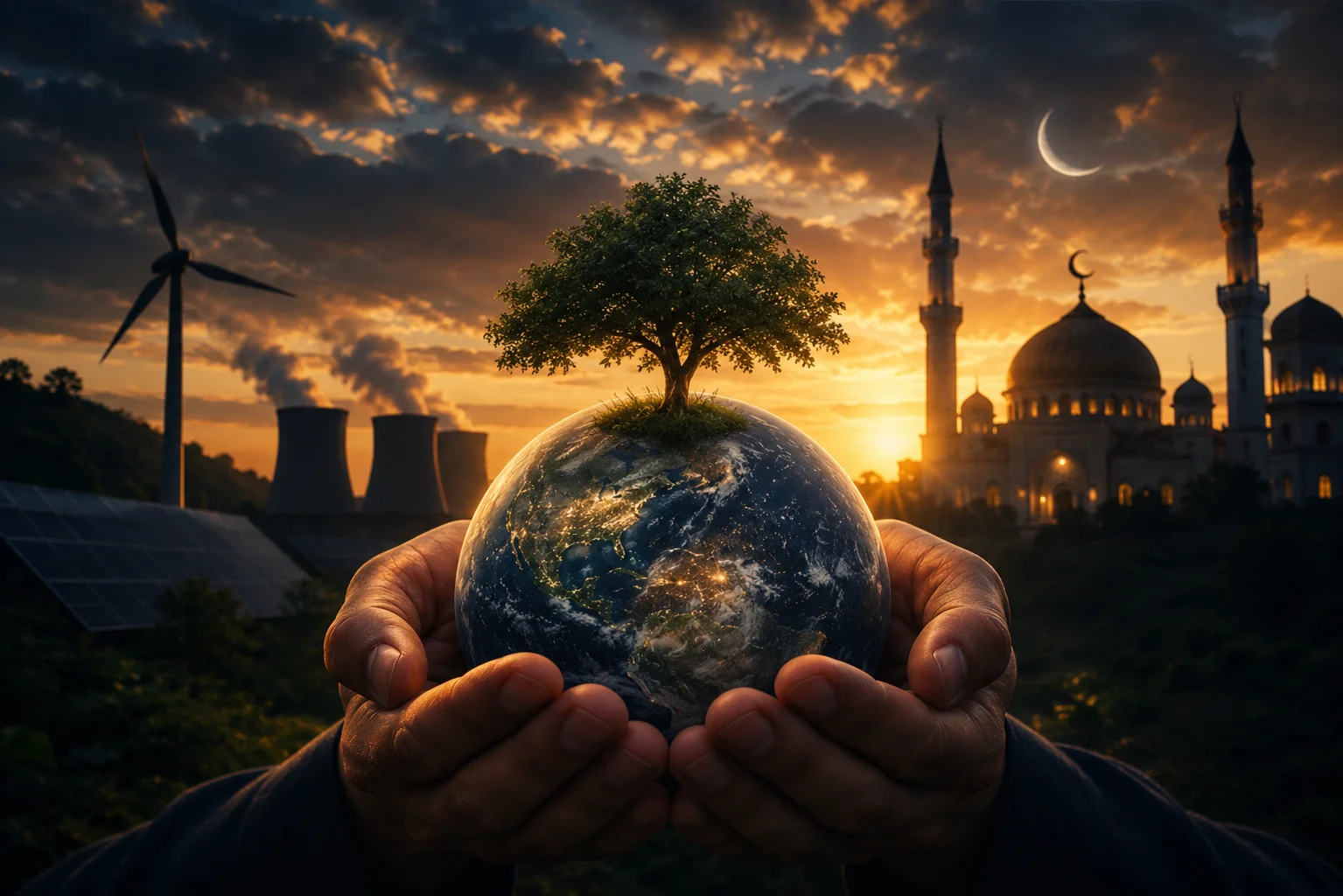
Sustainability Isn’t New and It Was Never Invented. It Was Simply Forgotten..
Before it was a framework, it was a responsibility.
Long before ESG scores, carbon budgets, and net-zero targets entered the boardroom, humanity was already accountable for the Earth. Not to shareholders. Not to regulators. To something far greater.
The idea at the heart of every sustainability framework is the fact that ‘we do not own this planet; but we are its caretakers‘. And it’s high time we reconnected with that truth.
We Were Always Trustees
The Qur’an describes humanity as khalifah ~ stewards, trustees of the Earth: “He has made you successors upon the Earth.” (Qur’an 6:165)
This isn’t just a theological concept. It’s a governance principle. A framework for how we use resources, lead communities, and make decisions with lasting consequences. Stewardship means you answer for what you do, and what you leave behind.
That idea sits at the very foundation of the UN’s Sustainable Development Goals — 17 interconnected goals that call on governments, businesses, and individuals to build a world that works for everyone, now and in the future.
Restraint Is a Climate Strategy
One of the most underrated climate solutions isn’t technology. It’s human behavior. The Qur’an warns plainly: “Eat and drink, but do not be excessive.” (Qur’an 7:31)
The Prophet Muhammad ﷺ modeled a life of simplicity:
- modest consumption
- minimal waste
- intentional living
His guidance on eating was one-third food, one-third water, one-third air; this is not just personal advice. It is a framework for sustainable living.
Overconsumption is one of the primary drivers of climate change, biodiversity loss, and resource depletion. We know this. The data is unambiguous. And yet our systems continue to reward more production, more consumption, more growth at all costs!
Faith traditions cut to the root of that problem: human behavior.
The Prophet Muhammad ﷺ went further — declaring the planting of a tree an act of ongoing charity/sadaqah jariyah. Every person or animal that benefits from it is a reward. That’s a 7th-century case for ecosystem services.
It reinforces that Islam doesn’t just call for environmental participation, it actively incentivizes regenerative action.
This is exactly what SDG 12 (Responsible Consumption), SDG 13 (Climate Action), and SDG 15 (Life on Land) are asking of us. The language is different. Yet the call is the same. Sustainability doesn’t begin with innovation. It begins with restraint.
Justice Is an Environmental Issue
Climate change is not an equal-opportunity crisis. The communities most devastated by floods, droughts, and food insecurity are overwhelmingly those who contributed the least to causing them. This is not just a policy failure but a moral and ethical one.
Consider the leadership of Moses, who stood for justice and guided communities through hardship and transition. The Prophet Muhammad ﷺ modeled governance rooted in fairness; accountable to people and to a higher moral standard. Prophetic traditions across faiths have long centered in justice, equity, and protection of the vulnerable as non-negotiables.
SDG 10 (Reduced Inequalities), SDG 11 (Sustainable Cities), and SDG 3 (Good Health and Well-being) reflect this same imperative: sustainability that doesn’t center justice isn’t sustainability; it’s efficiency for the wealthy and the privileged!
Everything Is Connected. It Always Was.
The SDGs are explicitly designed as an interconnected system. Progress in one area shapes progress in others. But here’s what’s remarkable: faith traditions understood systems thinking long before it became a discipline!
Overconsumption drives climate change. Climate change deepens inequality. Inequality erodes governance and social stability in the long-run. And governance failures in return slow down climate action significantly.
The cycle is vicious — and the entry point is centered around ‘values’. Faith traditions teach that imbalance in one part of life creates imbalance as a whole. The SDGs reflect the same truth through data, targets, and global agreements.
The Missing Ingredient Isn’t Data
We have the frameworks. We have the science. We have the technology. What we often lack is alignment between action and values.
The Prophet Muhammad ﷺ lived simply; modest consumption, minimal waste, intentional choices. His guidance wasn’t asceticism for its own sake. It was a model of living in balance with the world around him.
Across traditions ~ Islamic, Christian, Indigenous, and beyond — the message converges:
- Care for the Earth
- Protect life
- Act with justice
- Avoid excess consumption and wastage
The SDGs are, in many ways, a modern translation of these timeless core principles. What faith adds is the ‘why’; the moral depth that transforms compliance into commitment.
From Frameworks to Values
The climate crisis is not only a failure of systems. It is a failure of balance.
We have optimized for growth while neglecting stewardship. We have built institutions while forgetting accountability. We have advanced technology while losing the restraint to use it wisely. The path forward isn’t only technical; it needs to be rooted in principles and ethics.
Sustainability isn’t new. It’s a forgotten responsibility. And perhaps the most powerful thing we can do right now is not just to build something new — but also to return to accountability and to something true!
References: Qur’an 6:165 | Qur’an 7:31 | Hadith on moderation in eating (Tirmidhi) | Hadith on planting trees as charity (Sahih al-Bukhari/Muslim) | UN Sustainable Development Goals | Genesis 2:15